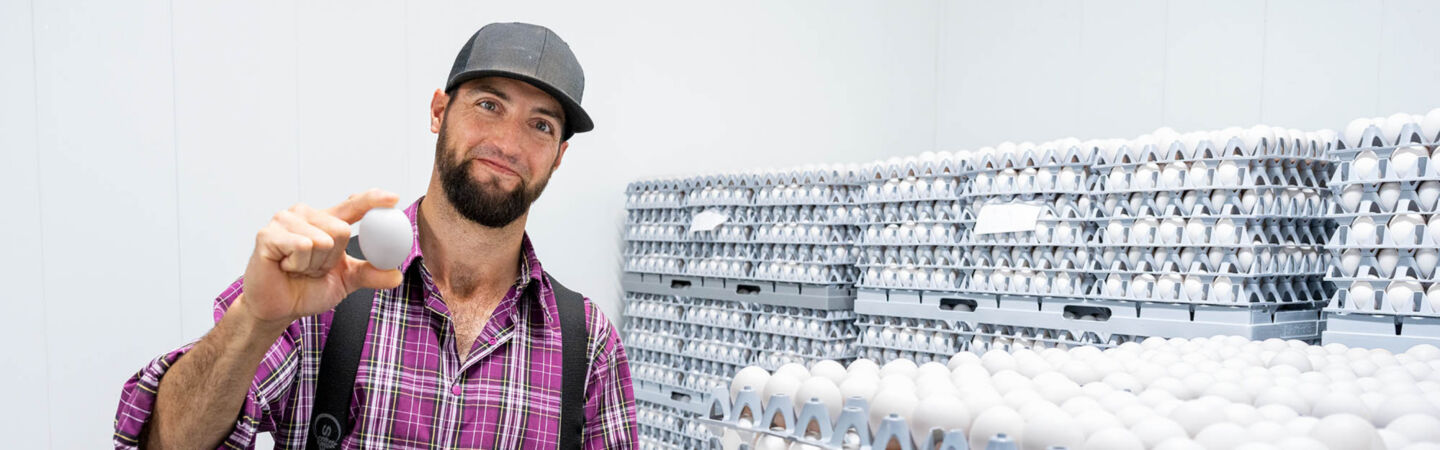
Newell Colony: An egg farm using heat recovery ventilation
By Egg Farmers of CanadaThis profile is the fourth in the Innovative farmer series—a collection of on-farm profiles that highlight sustainability and innovation projects underway on Canadian egg farms.
For the farmers of Newell Colony in Bassano, Alberta, building a new barn was a chance to invest in the future for their community, their workers and the hens they care for. They opted to incorporate an innovative heat recovery ventilation (HRV) system, which reflects their forward-looking approach and commitment to sustainability.
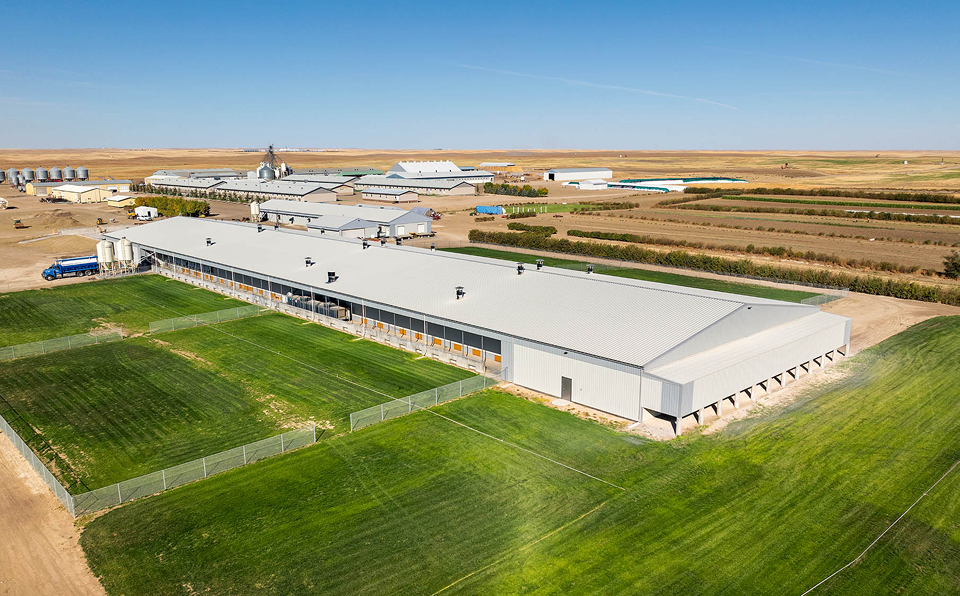
Just a few years after being installed, the farm has significantly reduced its fuel use and environmental footprint, and improved air quality for its hens and workers. The system provides a steady supply of fresh air, helping reduce dust and enhancing barn air conditions while managing humidity levels. This creates a healthier barn environment without affecting barn temperatures, even during cold Prairie winters. Newell Colony egg farmers Jerry Hofer, Ken Hofer and Elvin Waldner are proud to be part of this important step towards sustainability.
How smart ventilation works
In the cold Alberta winters, the system captures heat from the air leaving the building and uses it to preheat the fresh air coming in. This simple exchange prevents up to 80% of heat loss, dramatically reducing the farm’s use of natural gas for heating. In warm weather, the system extracts some of the heat from the outside air before it’s circulated through the barn.1
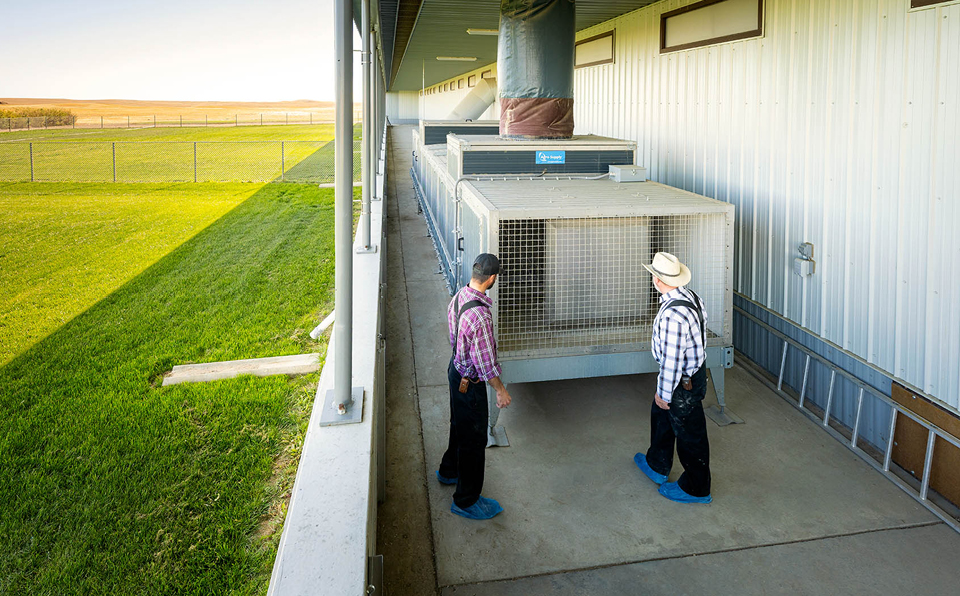
The system runs in the background, ensuring a supply of fresh air and controlling moisture and dust levels for the hens and the workers who care for them.
“It’s about building a farm that’s healthy for our animals and sustainable for generations to come,” say Ken and Elvin.
A tangible impact
This commitment to innovation has had a real-world impact. Every year, Newell Colony saves 34 tonnes of CO₂ emissions from entering the atmosphere. To remove that much carbon dioxide from the atmosphere, you would need to plant 512 seedlings and grow them for 10 years.2
This smart ventilation system is just one example of how Canadian egg farmers are advancing sustainability initiatives while caring for their flocks.
Learn more about heat recovery ventilation innovation at Newell Colony by reading our fact sheet.
1 Dyck, J. (2023). Ventilation Heat Exchangers: Save Energy, Save Money and Reduce Greenhouse Gases in Livestock Barns [Factsheet]. Ontario Ministry of Agriculture, Food and Rural Affairs. https://www.ontario.ca
2 United States Environmental Protection Agency. (2024). Greenhouse gas equivalencies calculator. https://www.epa.gov